A single open technical role can now draw more than 1,200 AI-generated applications before your team has scheduled a first interview.(1) Scale that across ten or fifteen open reqs during a growth push, and the model that got you your first twenty hires starts to buckle. The question isn’t whether your hiring approach needs to change as you scale. It’s which of three models, internal, hybrid, or fully staffed, genuinely fits the roles you’re trying to fill.
This post breaks down all three, where each one holds up and where it doesn’t, using real screening funnel data and a search that failed under one model before succeeding under another.

What Are the Three Hiring Models for Scaling a Tech Team?
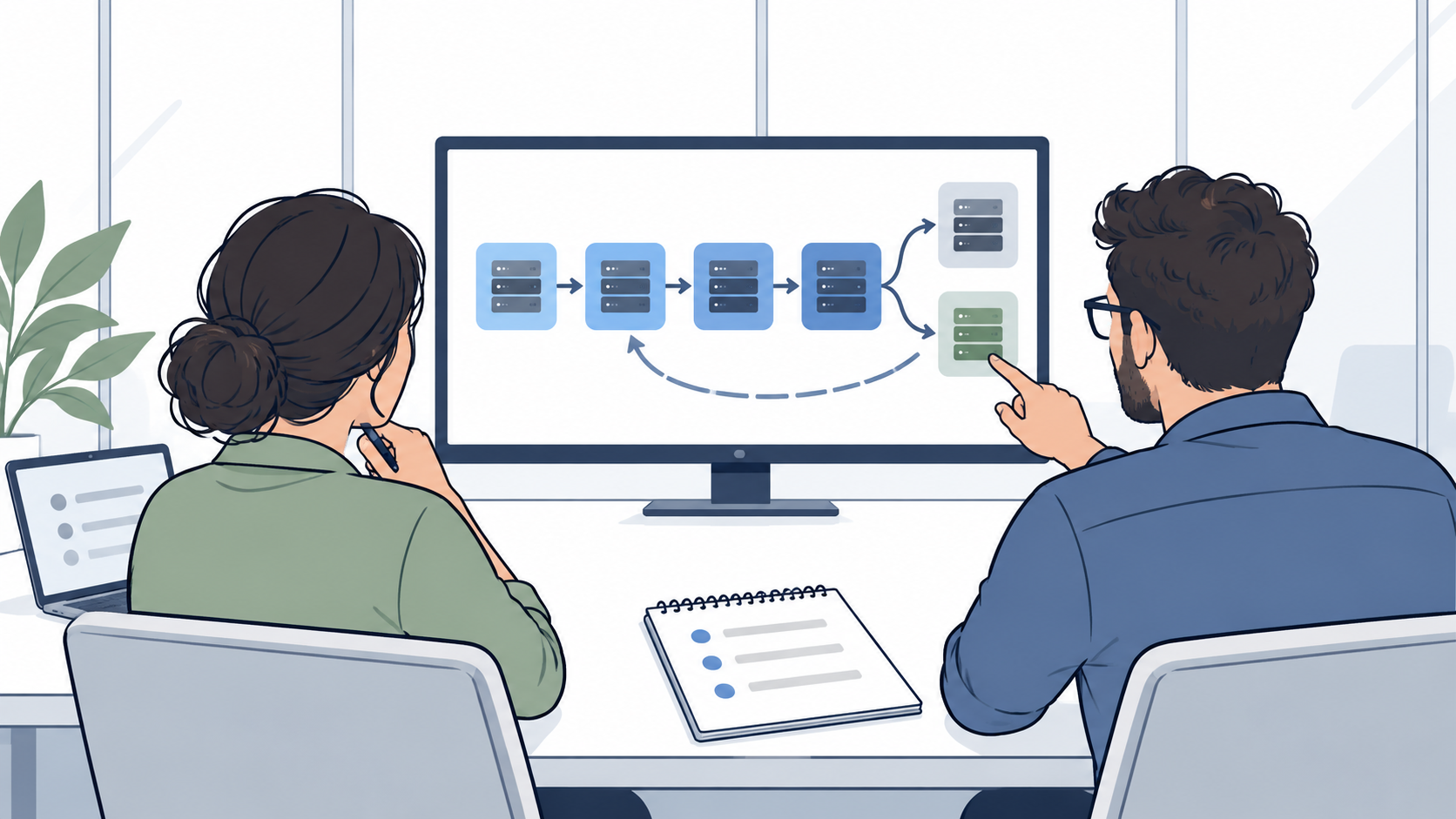
They come down to who does the sourcing and who owns the outcome: fully internal, hybrid, and fully staffed. In a fully internal model, your own recruiting team sources, screens, and hires every role. In a hybrid model, your team handles the roles it’s built for and a staffing partner handles the ones it isn’t. In a fully staffed model, a partner runs the entire search for a specific role or function, start to finish.
None of these is universally correct. The right one depends on volume, specialization, and how much of your internal team’s time you’re willing to spend on sourcing instead of building. Most fast-growing tech organizations end up somewhere between the first two options, then shift individual searches to the third when a role demands it.
What determines which model fits isn’t company size. It’s whether your internal process was built to handle the specific role in front of you. A generalist recruiter who’s great at filling support roles isn’t necessarily equipped to evaluate a Security Architect candidate, and that gap is where models two and three earn their keep.
When Does a Pure Internal Hiring Model Still Work?
It works well when roles are high-volume, well-understood by your team, and don’t require specialized technical evaluation. An internal recruiter who’s filled the same type of role a dozen times develops real pattern recognition for what a good fit looks like, and that institutional knowledge is hard to replicate from the outside.
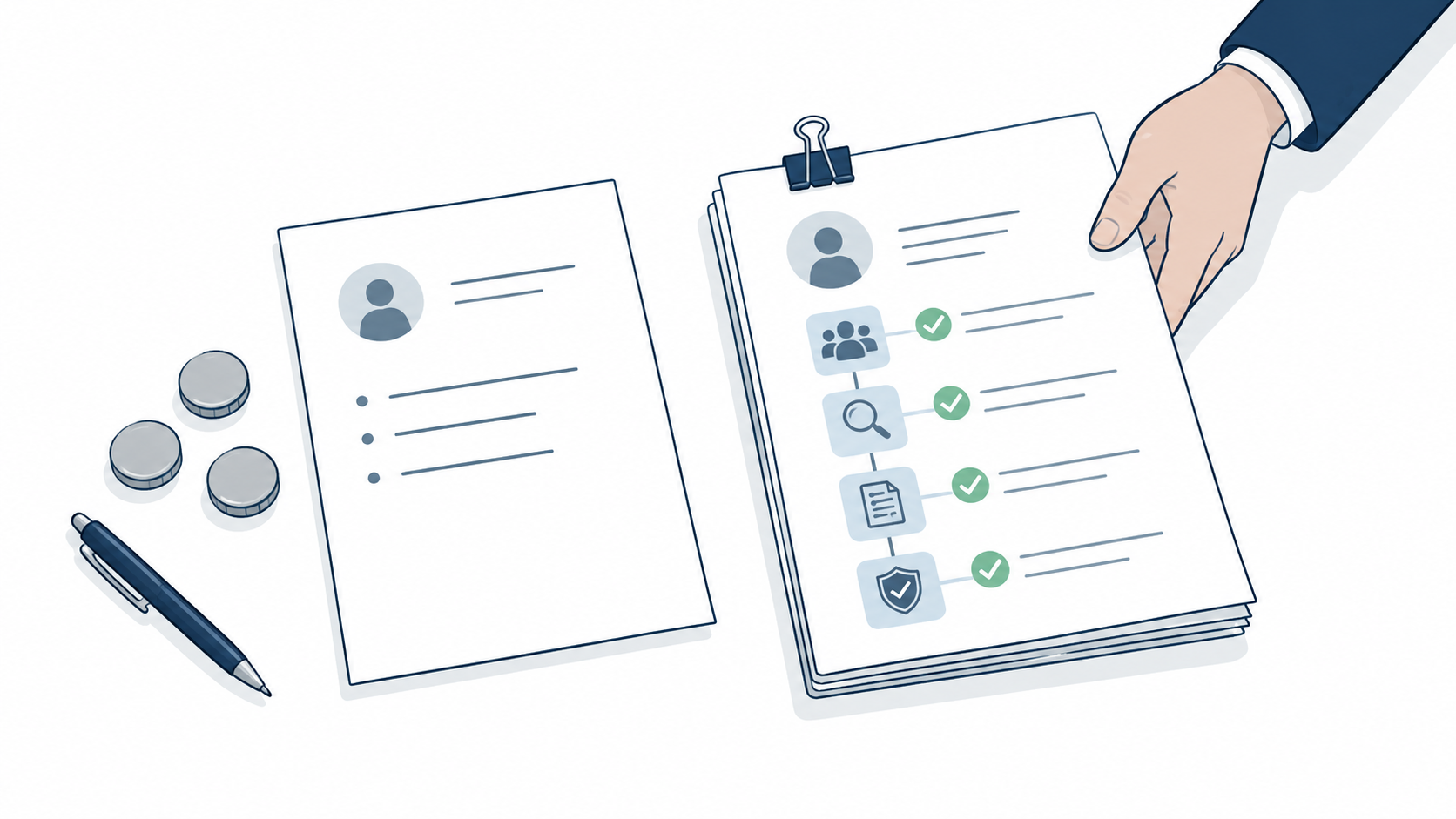
The cracks show up at scale. Out of a typical pool of 200 applicants, a real screening process narrows the field to roughly 11 truly viable candidates, about 5.5%, once eligibility checks, resume review, structured assessment, video screening, and fraud-risk review are all applied.(4) Running that funnel by hand across multiple open reqs at once is a full-time job on its own, and it’s rarely the job your internal recruiters were hired to do.
Is your team’s internal process genuinely built to run six screening stages consistently on every candidate, or is it running three of them because that’s what there’s time for? That gap is usually invisible until a bad hire or a stalled search makes it obvious.
How Does a Hybrid Model, Internal Team Plus Staffing Augmentation, Work Best?
It works by letting your internal team keep ownership of the roles it knows well while a staffing partner absorbs the roles that are eating disproportionate time or sitting outside anyone’s specialty. Mary Rafert, Senior Talent Acquisition Partner at CoorsTek, describes exactly this arrangement: “You are an extension of our TA team, and support us on some of our more niche and/or difficult IT roles.”(2)
That’s the hybrid model in practice. It’s not a wholesale handoff, it’s a targeted one. Your internal team keeps its process, its relationships, and its context on the roles it already handles well, while the harder searches, the ones requiring niche technical evaluation or a larger sourcing net, go to a partner built for exactly that.
Jim Schauer, Software Test Manager at Maxar, put it plainly when explaining why he consistently chose the same staffing partner: “I could ask BridgeView to find 2 more people like ‘John’ and they would do it. Not waste our time with candidates that they knew were not going to fit.”(2) That’s what a good hybrid partnership is really buying: a partner that learns your bar and stops sending you people who don’t clear it.

Not sure which model fits your next round of hiring? Let’s map it out together.
- 60,000+ vetted technical candidates across 60+ disciplines
- 87% contractor extension rate, built for roles that grow with you
- Searches from individual contributor roles through C-suite placements
When Should You Hand Off High-Demand Technical Roles Entirely to a Staffing Partner?
When the role is senior, specialized, or already stalled under an internal process, that’s when a full handoff earns its cost. A publicly traded, multi-billion-dollar commercial airline lost its CIO less than a year into the role and spent six months running the search internally without identifying a viable candidate.(3) The vacancy created real operational risk while senior leadership absorbed CIO duties on top of their own jobs.
Handed to a staffing partner, the search ran differently from the start. Roughly 150 to 200 candidates were sourced and reviewed, 7 were formally presented to the client, and 2 advanced to final interviews.(3) The client hired a CIO with direct airline industry experience in under 90 days from engagement to offer, 50% to 65% faster than the process it replaced.
Nathan St. Pierre, Director of Service at Kardex, sums up why this model works for demanding roles: “I don’t think I’ve ever seen any other firm be able to actually go through the vetting process as well as BridgeView does.”(2) For roles where a bad hire is genuinely expensive, that depth of vetting is the entire value proposition of handing the search over completely.
How Fast Can You Really Scale With Each Model?
Considerably faster with staffing involved, and the CIO search is the clearest evidence: six months stalled internally versus under 90 days once a partner took over, a 50% to 65% improvement in time to hire.(3) That gap compounds when you’re filling multiple roles at once during a growth push, since your internal team’s bandwidth doesn’t scale the way a partner’s candidate pipeline does.
Sam Jarvis, EVP of Sales at BridgeView, frames the value this way: “The fundamental purpose of staffing is really to save our clients time and energy, so getting it right the first time is really the most valuable thing a staffing firm can bring to the table.”(5) Speed without accuracy just moves the problem downstream. The 87% contractor extension rate suggests the speed BridgeView delivers isn’t coming at the cost of fit.(5)
What Does Each Model Really Cost You at Scale?
More than the visible line item in every case, just distributed differently. Senior technical roles carry real market weight, a Chief Information Officer now commands $264,000 to $442,000, and Information Security Manager and Cloud Architect roles regularly clear $200,000-plus.(6) Getting one of those hires wrong costs far more than the salary alone.
Internal-only hiring hides its cost in recruiter and hiring manager hours spent filtering non-viable applicants instead of building your team. Hybrid and fully staffed models carry a visible bill rate, but that rate buys a process built specifically to run the screening funnel your internal team doesn’t have the bandwidth to run consistently at every stage.
Courtney Truesdel, VP of Business Development at BridgeView, explains what that process is really buying: “Technical skills alone don’t guarantee a successful hire. We take the time to understand our clients’ teams, culture, and work environment because long-term success comes from finding the right overall fit.”(5) That’s the piece a pure cost comparison misses. The cheapest hire on paper isn’t cheap if it doesn’t last.
Ready to scale your tech team without breaking your internal process?
- A six-step screening process built for high-demand technical roles
- 87% contractor extension rate and 96.7% direct-hire retention past 6 months
- Hybrid or fully-staffed engagements, whichever your team needs
Frequently Asked Questions
What is staff augmentation, in plain terms?
How quickly can companies scale with staff augmentation?
How do I choose a staff augmentation partner for engineering teams?
Are staffing agencies worth it for scaling a tech team?
Should I use one staffing firm or work with several to scale faster?
Sources
- BridgeView 2026 Salary Guide. “A single technical role can draw more than 1,200 AI-generated applications.” bridgeviewit.com.
- BridgeView client testimonials. Mary Rafert, Sr. Talent Acquisition Partner, CoorsTek; Jim Schauer, Software Test Manager, Maxar; Nathan St. Pierre, Director of Service, Kardex. On BridgeView’s role as an extension of internal talent acquisition teams and vetting quality. BridgeView internal testimonials, 2026.
- BridgeView CIO Executive Search Case Study, commercial airline client. “Six-month stalled internal search; staffing firm sourced approximately 150 to 200 candidates, presented 7, advanced 2 to final interviews, and closed the hire in under 90 days, 50% to 65% faster than the prior process.” bridgeviewit.com.
- BridgeView Candidate Screening and Fraud Risk. “Six-step screening process narrows 200 applicants to roughly 11 truly viable candidates (5.5%).” bridgeviewit.com.
- BridgeView leadership insight. Sam Jarvis, EVP of Sales, on the purpose of staffing and the 87% contractor extension rate; Courtney Truesdel, VP of Business Development, on vetting for team and culture fit. BridgeView internal insight, 2026.
- BridgeView 2026 Salary Guide. “Chief Information Officer salary range: $264,000 to $442,000; Information Security Manager and Cloud Architect roles regularly clear $200,000-plus at the high end.” bridgeviewit.com.